The Hardest Word in Cell Therapy Is 'Enough'

Executive Summary
"Everything in this field pulls toward more: another course, another infusion, another marker moving the right way. The discipline that matters most is knowing when to stop. One patient taught me the difference."
In a field built on the promise of more, the discipline that matters most is knowing when to stop. Here is one patient who taught me the difference.
Everything in this field pulls in one direction: more. Another course, another infusion, another marker nudged in the right direction. The technology is generous, the patient is hopeful, and the result often really is improving. That combination is exactly where good medicine goes to die, because the moment you cannot say "enough," you are no longer treating a person. You are chasing a curve.
I learned to say it properly from a fifty-seven-year-old man.
He came to me after an obstructive acute kidney injury the previous spring. Creatinine over a thousand, three sessions of dialysis, and an outcome written in his chart as chronic kidney disease, stage five, the last stage before replacement. When we began, his filtration was eleven millilitres a minute, his hemoglobin was low, and his inflammation was high: a high-sensitivity C-reactive protein of sixteen and a half, an ESR in the seventies. This is not a patient anyone treats casually. Three infusions in someone this fragile is itself a decision that has to be justified.
Before I gave a single dose, I did the one thing I insist on. I wrote down what I would measure. Six things: creatinine, estimated filtration, hemoglobin, ESR, high-sensitivity CRP, bicarbonate. Not the numbers that happened to be on the discharge summary, the ones I chose, because they were the ones that would actually tell me whether this was working. And I wrote down when I would measure them: before the first dose, then at two weeks, one month, three, six, twelve. Then, and only then, three courses of amniotic mesenchymal cells over four months.
What happened was, by any measure, good. The CRP fell seventeen-fold in eighteen days and kept falling; seven months on it sits near zero. The ESR came down from eighty to single digits. Filtration stabilized in the fifteen-to-eighteen range and has held there for eight months. No protein in the urine. And in a man that fragile, across three infusions, not one adverse event, which in this population, where safety data barely exist, is a finding on its own.
Now here is the part I actually want to write about. In July I opened his file to plan the next course, and I wrote instead that there would not be one.
Not because he had failed. Because he had plateaued. The inflammatory target I was aiming at was gone. Function was stable. Another infusion would not move the trajectory; it would only move money and expose him to risk for a return of zero. So I recorded that the strategy now shifts to protecting the kidney and preparing, calmly and in advance, for the possibility of replacement therapy later. And I stopped a treatment I was fully capable of continuing, that the patient would happily have continued, that was, on paper, still "working."
I could only do that because of the boring decision I had made months earlier. You cannot see a plateau unless you have been measuring the same thing, on the same schedule, from the beginning. If I had measured whatever was convenient at each visit, I would have seen noise, and noise always looks like it might improve with one more push. It was the discipline, not the drug, that let me see the flat line and believe it.
In a clinical trial this has a name. It is called a futility criterion, and it is written into the protocol before the first patient is enrolled, precisely so that no one can talk themselves into continuing a treatment that has stopped helping. Trials build that brake in on purpose, because they know how strong the pull toward "more" is even among disciplined people. And here is what I cannot get past: outside a trial, in every jurisdiction I know of, there is no such requirement at all. The one safeguard specifically designed to protect a patient from a doctor's optimism simply is not asked for the moment the patient is treated outside a study. It exists, or it does not, entirely at the discretion of the physician.
I do not think that should be left to my character. My restraint should not be the only thing standing between a patient and an endless series of infusions that each look reasonable in isolation. I am disciplined on my good days. Everyone is undisciplined on their tired ones, and a tired physician who cannot say "enough" is a business model.
So when people ask me what a standard for this kind of medicine should contain, this is near the top of my list, and it is not a new invention. Decide, in writing, before the first dose, the value at which you will call the treatment ineffective, and the point at which you will stop even a treatment that is helping because it has stopped helping more. Orthopedics and transplantation have measured and recorded this way for decades. We can too. Nothing about cells makes us exempt.
The man runs his own errands now and manages his condition instead of being managed by it. I am glad, and I am careful about how I say it, because a good outcome is the most dangerous moment for judgment. It is precisely when the result is excellent that stopping feels like a mistake and continuing feels like generosity. It is neither. Continuing past the plateau is not generosity. It is the failure to have decided in advance what "enough" would look like, and then the courage to mean it when the day comes.
That is the word I have had to practice most in this field. Not "breakthrough." Enough.
This is an opinion column describing a single patient. It is not a claim of efficacy, and it is not medical advice. There was no control group, and I have named the other treatments given at the same time.
Author's Profile
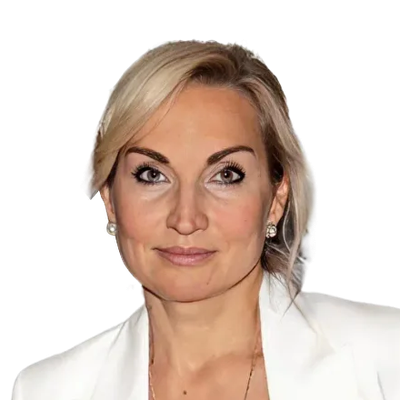
Dr. Tatiana Bosch is a leader in precision longevity, cell cryopreservation, and biological asset protection. In her role as VAANAA’s International Medical Director, she aligns clinical biotechnology with the high-performance lifestyles of global executives.
Related Intelligence Briefings
Cell Therapy Without Certainty: How Should Medicine Move Forward?
Lynch Syndrome Cancer Vaccine: What the New Trial Shows
Quantifying Individual Rates of Biological Decline Through a Non-Invasive Biological Age Clock
Begin Your Biological Optimization Journey
Schedule a private consultation with the VAANAA clinical team to evaluate your biomarkers and build a personalized longevity protocol.