Cell Therapy Without Certainty: How Should Medicine Move Forward?

Executive Summary
"Four of more than two thousand mesenchymal cell trials have carried a Phase III or IV result into the registry. For fifteen years I built that kind of evidence. Now I practise where it does not exist, and this is my attempt to change my thinking out loud."
A breakthrough technology changed the rules of the game faster than the physician changed his thinking. What follows is my attempt to change mine, out loud.
Let me start with a number that has stayed with me. Of the more than 2000 trials of mesenchymal cells registered on ClinicalTrials.gov, the number that have carried a Phase III or Phase IV result into the database is 4. Not four hundred. Four. 94% of registered trials never entered their results at all.
I do not offer that number as an accusation. I offer it as a description of the ground I now stand on. Because for fifteen years I stood on very different ground. I was a principal investigator and a national trial coordinator in cardiology and endocrinology, and my job was to manufacture the one thing that number is missing: evidence. Not to discover it, to build it, from procedures that are each entirely unglamorous. Refuse the patient who does not meet the inclusion criteria. Record every adverse event and grade its causality. Hold the visit on the exact scheduled day. Hand the raw data to an auditor who owes you nothing. Report the result whether or not the sponsor wanted to hear it. None of that is science in the heroic sense. All of it is what separates data from impression.
So I know exactly what I gave up when I walked into cell therapy. And I want to tell you why I walked in anyway, and what I have decided to do about the thing I gave up.
I did not come here as a believer. I came here because the standard of care had run out for people in front of me, and this was the only field where something was happening on a timescale shorter than a decade. I was not looking for a miracle. I was looking for a laboratory I could trust, and I judged it by the same three questions I had spent fifteen years asking sponsors: is the product quality confirmed or merely claimed; is the number of viable cells guaranteed in every batch; and is the cost one an actual patient can reach. It took four years of asking before I signed anything.
Here is the uncomfortable part. Evidence-based medicine, the discipline I love and still live by, answers one question: is this intervention proven, on average, across a population. Its unit is the population and its instrument is the randomized trial and the guideline built on top of it. For thirty-five years that guideline has been my protection and my patient's. It shields the patient from my fatigue, from my very human wish to see improvement where there is none, from the pressure of the moment. It shields me legally. I am not romantic about guidelines. I am grateful for them.
But the medicine I practice now asks a different question. Not "is this proven on average" but "what does this specific person need, with this genome, this inflammatory profile, this metabolic state, this biological age." And the honest fact is that a recommendation cannot answer it, not because the science is too young but because of what a recommendation is. A recommendation is an average across a sample. A single patient is not a sample. So for the situation in front of me there is no guideline, and there should not be one in the old form, because a document telling me to do the same thing for every patient would contradict the very idea of treating one patient.
That is the gap in the title. And I have watched people try to fill it in the worst possible way.
The market filled it with volume. The most careful count we have found close to fifteen hundred businesses in one country alone selling cell therapy straight to consumers, more than four times as many as five years earlier, under a regulatory regime that had not changed. I take that number seriously, but I also read it carefully, because it measures one thing and one thing only: practice happening outside the registration pathway. It does not, and cannot, tell you which of those clinics is careful and which is reckless. A serious operation with certified manufacturing, written selection criteria, and outcome tracking, and an operation exploiting desperate people, are described by the same phrase. That is not a moral judgment the number is capable of making. Which is exactly why the number cannot be the answer, and neither can outrage about it.
So what do I actually do, on a Tuesday, with one person and no guideline?
I answer four questions before I give the first dose, and I answer them out loud, to the patient. What will I measure to judge the result. When will I measure it. At what value will I admit there is no effect. And which of that am I obliged to tell you now, before we start. None of those four questions needs a regulator or a statistician. Each needs a physician willing to commit in advance.
And when a patient asks me the question they always ask, "Doctor, how do you know this will work for me," I have stopped pretending. I tell them the truth in two halves. I know on what grounds I am offering this to you: the trials, the meta-analyses, the biology, the experience of colleagues and my own. And I do not know whether it will work for you, because all of that describes groups and you are one person. But I know what I will measure, and when, and the moment I will be able to tell you whether it worked. Something changes in the room when I say that. The patient stops waiting for a guarantee that does not exist and becomes a participant in a protocol. That is a better relationship than hope.
I am not asking anyone to lower the bar. I am asking us to move it. Evidence-based medicine set the bar at the population, and that bar will not move to the single patient in my lifetime or yours. But there is a second bar, and it is entirely within reach: the discipline with which I make and record a decision for one person. Measure something chosen in advance. Measure it on a schedule set in advance. Name both sides of the result. Put the next measurement on the calendar. Say "enough" when the curve goes flat, even when you could keep going.
The gap between breakthrough and approval will not close while I am practicing. I have made my peace with that. The gap between breakthrough and the oath, between what the technology now allows and what I owe the person in front of me, that gap I can close today. So can you. No one has to give us permission.
This is an opinion column. Every clinical detail I describe is a single case, not proof, and I have named where the evidence ends in each one.
Author's Profile
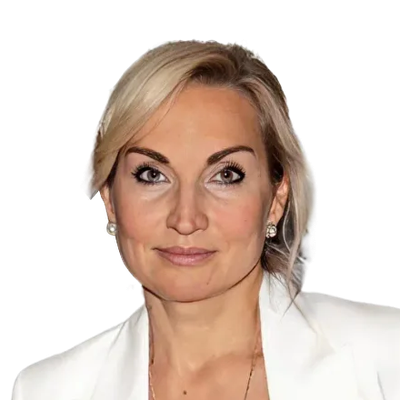
Dr. Tatiana Bosch is a leader in precision longevity, cell cryopreservation, and biological asset protection. In her role as VAANAA’s International Medical Director, she aligns clinical biotechnology with the high-performance lifestyles of global executives.
Related Intelligence Briefings
Oral Glucagon-Like Peptide-1 Receptor Agonists for Weight Management in Adults Without Diabetes: A Systematic Analysis of Clinical Efficacy
Follicular Regeneration via Hair Follicle Stem Cell-Derived Exosomes and miR-181a-5p: Mechanistic Insights into Telogen-to-Anagen Transition
Oral Semaglutide and Body Composition: How the Daily Pill Affects Muscle, Fat, and Dietary Choices in Type 2 Diabetes
Begin Your Biological Optimization Journey
Schedule a private consultation with the VAANAA clinical team to evaluate your biomarkers and build a personalized longevity protocol.