Bowhead Whale DNA Repair: The Cellular Secrets of Mammalian Longevity
Executive Summary
"How does bowhead whale DNA repair work? Discover how these giant marine mammals resist cancer and what their cellular biology reveals about human longevity."
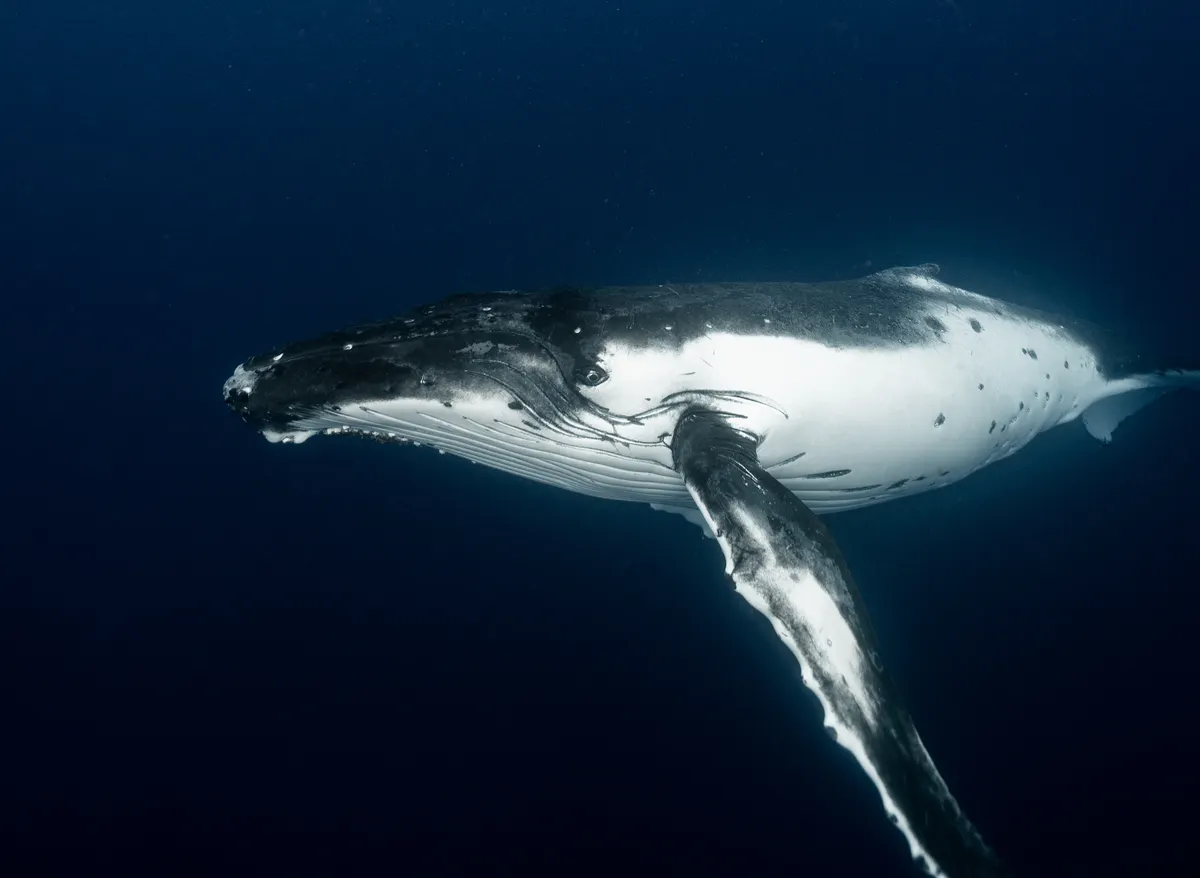
The bowhead whale is one of the most remarkable creatures on Earth. These massive marine mammals can live for more than two centuries. They also reach weights exceeding 80,000 kilograms. Statistically, an animal of this size should face an overwhelming risk of cancer. Because cancer begins with random mutations during cell division, having trillions of cells dividing over two hundred years should mathematically guarantee malignant tumors. Yet, these ocean giants remain exceptionally cancer resistant.
This puzzling biological phenomenon is known as Peto's paradox. It describes the lack of correlation between a species' body mass, lifespan, and its overall cancer rates. For decades, scientists have tried to understand how large, long-lived animals escape the cellular errors that plague smaller species. New research suggests the secret lies in how the whale maintains its genetic code.
A study discussed in the r/longevity community on Reddit explored this mystery by examining primary fibroblasts. These cells, known as fibroblasts, are the foundational building blocks of connective tissue in mammals. This study was published on the bioRxiv preprint server. It is important to note that this research is preliminary. It has not yet undergone formal peer review by the scientific community.
The researchers made an unexpected discovery. They found that bowhead whale fibroblasts actually require fewer oncogenic hits, which are the individual mutation events that turn healthy cells into tumors, to undergo malignant transformation than human cells. At a basic cellular level, the whale's individual cells are actually more vulnerable to cancer-causing events than our own. The whale's resistance to cancer does not come from having indestructible cells. Instead, it relies on an incredibly high-performing biological maintenance system that intercepts and repairs genetic damage before it can take root.
The Molecular Safeguard: CIRBP and High-Fidelity DNA Repair
To understand this protective mechanism, we can use a helpful comparison. Imagine DNA repair in the bowhead whale as an ultra-fast, real-time cooperative code editor. This system features an aggressive auto-save and correction function. Even though individual lines of code are highly sensitive to typos, the editor's built-in correction plugin is so rapid and high-fidelity that it repairs spelling errors instantly. These mistakes are resolved before the program can crash or compile a malfunctioning version of the code.
In the whale, this cellular correction plugin is a protein called Cold-Inducible RNA-Binding Protein, commonly known as CIRBP. The researchers discovered that CIRBP is expressed at exceptionally high levels in bowhead whale tissues. When a cell experiences severe genetic damage, it must act quickly. This is especially true for double-strand breaks, which are severe injuries where both structural sides of the DNA ladder are snapped.
Cells have two main pathways to repair these critical breaks. The first is non-homologous end joining, a quick splicing process that rapidly glues broken DNA ends back together. The second pathway is homologous recombination. This is a slower but highly accurate repair process that copies the missing genetic code from an undamaged sister chromosome.
The primary study found that the bowhead whale's version of CIRBP uniquely supercharges both of these repair pathways. By facilitating rapid and accurate DNA patching, CIRBP helps the whale maintain lower overall mutation rates. This high-fidelity genomic maintenance prevents cancer from starting.
Understanding these natural biological defenses is highly valuable as we look for ways to protect human cells. Rather than waiting to treat advanced diseases, observing these molecular editing systems helps scientists understand the earliest stages of cellular health. In human medicine, early detection of cellular changes is already a priority. For instance, advanced oncological diagnostics are utilized to identify early signs of genomic instability before tumors can progress.
Evolution's Scale: The Mammalian Longevity Acetylome
To see if these survival strategies are unique to the bowhead whale, we must look at how molecular controls scale across the wider mammalian family. A study published in Nature Communications analyzed protein acetylation across 107 different mammalian species. This diverse group represented a 100-fold variation in overall lifespan.
Protein acetylation is a chemical modification where a small acetyl group is attached to a protein. This modification acts like a dimmer switch to adjust how the protein behaves. To study this across so many species, researchers developed an advanced computational tool called PHARAOH. This tool allowed them to analyze acetylome, which is the complete set of acetylated proteins, and proteome data, which represents the entire protein library within an organism.
The PHARAOH analysis identified 482 significant longevity-associated acetylated lysine residues in mice and 695 in humans. Lysines are specific amino acid building blocks that make up proteins. The study revealed a fascinating evolutionary pattern. In short-lived mammals, these lysine sites are often dynamically modified, shifting back and forth between states. In contrast, long-lived mammals have evolved to replace these flexible sites with permanent amino acids. Specifically, they use glutamine to mimic a permanently acetylated state, or arginine to mimic a permanently deacetylated state.
This structural adaptation was particularly notable in key enzymes like cystathionine beta synthase, an enzyme involved in protecting cells from oxidative stress. In contrast, ubiquitin-specific peptidase 10, an enzyme that stabilizes critical proteins involved in the DNA damage response, follows the converse pattern, where the long-lived human retains the reversibly acetylated lysine and short-lived mammals have the permanent arginine residue. By substituting these amino acids, evolution has hardwired stable, protective states directly into the proteins of long-lived species. This permanent molecular configuration allows larger mammals to maintain cellular stability over decades without needing to constantly adjust these individual protein switches.
Translating Cellular Superpowers to Humans
The contrast between the bowhead whale's genetic defense mechanisms and those of other mammals highlights the diverse strategies nature uses to promote longevity. While the whale relies on highly active DNA repair systems to protect its massive body, human clinical research often looks at different pathways to support cellular resilience.
Scientists are exploring how targeted molecular interventions might support our own natural defenses. For example, research into therapeutic peptides investigates how short chains of amino acids can signal cells to maintain their structural integrity as they age. However, there is a substantial difference between observing these natural adaptations in long-lived mammals and applying them to human therapy.
It is important to state plainly that this molecular research is not yet translationally actionable. While the discovery of CIRBP and the mammalian longevity-associated acetylome offers exciting insights, we cannot use this data to create specific human lifestyle protocols. We cannot, for instance, recommend specific temperature therapies, specialized diets, or direct interventions based on these early animal and computational studies.
For now, these findings serve as a powerful reminder of how nature solves the problem of aging. Longevity is not necessarily about having cells that are immune to damage. Instead, it is about having highly efficient, high-fidelity repair mechanisms that keep pace with the wear and tear of life. As researchers continue to study these extraordinary animals, we bring ourselves closer to understanding the fundamental limits of mammalian lifespan.
This article is for informational and educational purposes only and does not constitute medical advice, diagnosis, or treatment. The scientific findings discussed, particularly regarding experimental animal models and cellular research, are preliminary and should not be used to guide personal medical decisions. Always consult with a qualified healthcare professional or specialist regarding any health concerns, changes to your lifestyle routine, or experimental therapies. Never disregard professional medical advice or delay seeking it because of something you have read in this article.
Sources & References
Reddit r/longevity
Research Date: August 2026
Additional References
bioRxiv Preprint Server
Primary study on bowhead whale DNA repair
Nature Communications
Research on the mammalian longevity-associated acetylome
Related Intelligence Briefings
Nutritional Programming and Late-Life Resilience: How Early-Life Sugar Restriction Alters Adult Frailty
Living Neurons Are Computing in a Data Center. The Hard Part Is Proving They’re Efficient.
What Is Quantum Biology in Medicine and Why Does It Matter?
Begin Your Biological Optimization Journey
Schedule a private consultation with the VAANAA clinical team to evaluate your biomarkers and build a personalized longevity protocol.