How Digital Health Cognitive Interventions Shield Your Mental Capital
Executive Summary
"Discover how active digital health cognitive interventions and predictive mathematical models of aging protect executive cognitive capital and metabolic health."
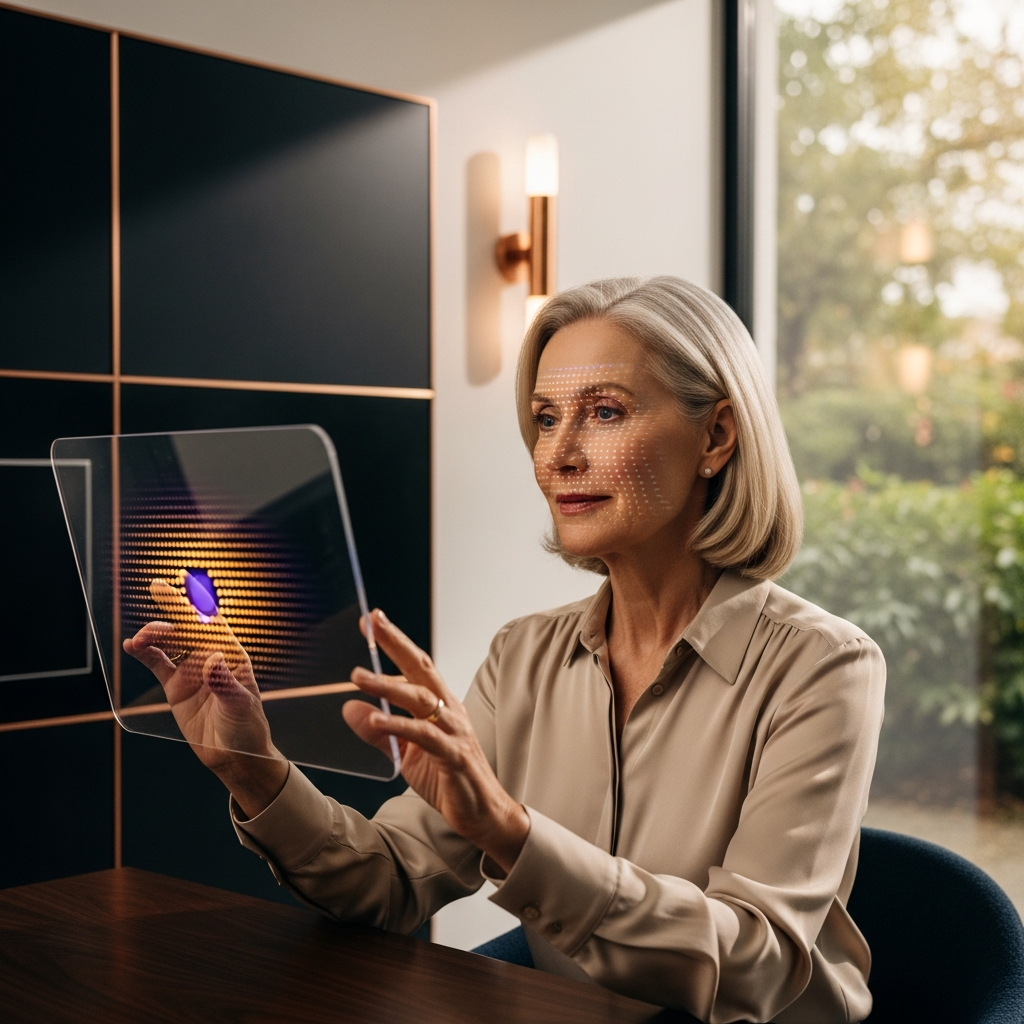
Implementing a proactive digital health cognitive intervention is rapidly becoming the ultimate strategy for forward-looking tech pioneers and biotech investors looking to safeguard their biological assets. Historically, the longevity market has treated physical parameters as trailing indicators, looking at retrospective health metrics much like a venture capitalist reviews trailing quarterly financial statements. Classic wearable devices track raw heart rate variability, sleep architectures, and daily steps, yet these tools remain fundamentally reactive because they only record what has already occurred. This passive tracking leaves an immense operational gap, as merely knowing that your sleep was disrupted yesterday does not automatically optimize your cellular resilience or cognitive performance today. To bridge this critical divide, a new paradigm of active bio-monitoring is emerging, transforming retrospective biometrics into real-time, personalized clinical actions that secure executive longevity.
In this forward-looking ecosystem, we must begin treating human physiology as an actively managed asset portfolio where the core objective is to prevent sudden depreciation in cognitive and physical capital. In this structural framework, passive wearables function as historical balance sheets, while integrated generative artificial intelligence serves as an algorithmic, real-time risk-hedging advisor. By dynamically shifting daily lifestyle asset allocations, this technology ensures that minor physiological deficits are systematically corrected before they compound into systemic metabolic or neurological decline. The integration of conversational and generative interfaces represents the critical closing of the physiological feedback loop. Through sophisticated natural language processing, these digital systems act as personalized clinical partners, continuously pushing the male executive toward peak cognitive and metabolic baselines.
When an active tech pioneer experiences high levels of occupational stress, traditional diagnostics might only register an elevated resting heart rate hours after cellular strain has taken hold. In contrast, an interactive generative AI platform can detect early indicators of metabolic fatigue or cognitive deterioration through subtle shifts in speech patterns, physical gait, and heart rate variability. By initiating highly targeted, real-time interventions, these closed-loop systems guide the user through personalized respiration protocols, cognitive exercises, or precise nutritional adjustments. This proactive stance is absolutely essential for safeguarding long-term executive longevity, especially when managing high-stakes capital portfolios where maintaining peak cardiovascular health and sharp mental acuity under extreme pressure are crucial. For the modern male executive, this active biological surveillance protects against sudden declines in energy, cognitive focus, and overall metabolic resilience, facilitating metabolic health optimization that preserves both physical vitality and mental clarity.
The Synergy of Wearable Biometrics and Large Language Model Dialogues
To validate this revolutionary approach to physiological portfolio management, clinical trials are shifting toward rigorous, randomized controlled designs that prove digital health efficacy. A key milestone in this field is clinical trial NCT07524478, sponsored by researcher Tatsuhiro Hisatsune, which represents a massive leap forward for active behavioral interventions. This six-month randomized controlled trial is currently recruiting 300 healthy participants aged sixty-five and older to evaluate how continuous digital interactions can mitigate the subtle, early-stage declines in motor and cognitive performance. By targeting this demographic, the researchers aim to demonstrate that structured algorithmic interventions can prevent the early cognitive and physical depreciation that often precedes formal clinical diagnoses. The trial leverages a dedicated mobile application designed to turn passive data streams into active therapeutic dialogues.
The underlying technology of this clinical study involves a sophisticated fusion of longitudinal biometric tracking and advanced generative artificial intelligence. Participants wear advanced Fitbit devices that continuously log multi-domain data, specifically tracking physical activity, sleep architecture, and nutritional habits. Rather than allowing these critical metrics to sit idle in a passive database, the custom application feeds this data directly into a large language model. The generative artificial intelligence then initiates daily, highly contextualized dialogues with the user, analyzing their physiological state in real time. If the wearable detects a sharp decline in deep sleep or an uncharacteristic drop in physical activity, the digital health cognitive intervention does not simply send a generic notification but instead engages the user in a nuanced discussion to collaboratively formulate an actionable recovery strategy.
Preliminary findings from earlier phases of this research track have already demonstrated that automated, data-driven alerts significantly improve exercise adherence, sleep hygiene, and nutritional compliance. These behavioral improvements directly mediate enhanced cognitive performance, demonstrating that targeted behavioral adjustments can yield measurable, long-term neurological benefits. By scaling this technology into a large-scale randomized trial, the researchers seek to prove that generative artificial intelligence can serve as a highly scalable, cost-effective digital therapy. For biotech investors and tech pioneers, this trial underscores the immense commercial viability of software-as-a-medical-device platforms. It illustrates a clear pathway where algorithmic behavioral management can be commercialized as a premium service to maintain peak executive performance and physical strength.
Bridging Multi-Domain Care with Audio Diaries and Patient Led Self Management
While the Japanese trial highlights the power of predictive AI combined with wearables, another critical layer of active bio-logging involves patient-led verbal reflection. This innovative approach is exemplified by a clinical trial from Emory University, registered as NCT07474376, which evaluates a unique audio diary mobile application. This study focuses on the feasibility of the Fabla-diabetesMM application among thirty older adults managing type 1 or type 2 diabetes alongside complex multimorbidities. By utilizing vocal recordings, this clinical trial explores how structured audio reflections can simplify complex self-management routines. It shifts the burden of meticulous manual data entry into a natural, conversational format that older adults find intuitive and engaging.
Managing complex diabetes and multi-system diseases is notoriously difficult, requiring patients to balance intricate medication regimens, strict dietary restrictions, and physical therapies. The Fabla-diabetesMM platform allows users to verbally record their daily challenges, adherence rates, and subjective well-being. This qualitative audio data, when combined with quantitative clinical readings, provides healthcare providers with a rich tapestry of the patient's daily life. It proves that vocal biomarkers and structured audio diaries can serve as vital clinical diagnostic tools, capturing psychological and physiological nuances that standard blood panels might miss. For the high-performing executive or the aging investor, these voice-activated tools represent a seamless way to maintain absolute clinical compliance without the friction of traditional health logging.
The synergy between these two distinct clinical trials is profound and opens up exciting possibilities for multi-domain digital care. While the Hisatsune study uses a top-down approach where generative AI analyzes biometric data to guide the patient, the Emory study showcases a bottom-up model where the patient's own voice acts as the primary data stream. Combining these two paradigms creates a highly personalized, dual-engine health management system. In this integrated model, voice-based emotional and cognitive indicators are combined with physiological wearable metrics. This multi-dimensional approach ensures that physical and mental health are managed in unison, leading to vastly superior clinical outcomes. Such developments are crucial for designing the next generation of precision diagnostics and longevity therapies.
Engineering Preventive Diagnostics through Predictive Mathematical Models of Aging
Beyond immediate behavioral interventions, the ultimate objective of collecting massive, multi-domain wearable data streams is to construct predictive mathematical models of aging. By applying advanced machine learning algorithms to longitudinal Fitbit data, researchers aim to define mathematical baselines for functional health states. This process allows for the creation of a dynamic digital twin, which is a virtual representation of the user's physiological systems. Through continuous refinement, this model can detect minute deviations in heart rate variability, physical gait, and sleep architecture before they manifest as physical symptoms. These early-stage deviations serve as highly sensitive biological age diagnostics, warning of potential cognitive or physical decline long before standard clinical thresholds are crossed.
To construct a robust predictive health state modeling system, researchers must analyze how different physiological systems interact over time. For example, a sudden disruption in sleep architecture may correlate with a subsequent drop in daytime physical activity, which in turn elevates systemic inflammation and impairs glucose metabolism. By mapping these interconnected pathways mathematically, the algorithms can project future health trajectories with remarkable precision. This predictive capability allows clinicians to shift from a reactive treatment model to a highly targeted, preemptive intervention strategy. Instead of waiting for metabolic dysfunction or cognitive impairment to occur, the system prescribes subtle, algorithmic adjustments to sleep, nutrition, and exercise.
For biotech investors, this represents a massive paradigm shift in the preventive medicine landscape and a compelling longevity biotech investment opportunity. The ability to model and predict human aging trajectories based on consumer-grade wearables democratizes access to elite diagnostics. It provides a scalable framework that can be integrated into corporate wellness programs, private health clinics, and premium insurance models. Furthermore, these mathematical models can be paired with advanced molecular diagnostics, such as epigenetic clocks and cell-free DNA tracking. By combining algorithmic behavioral modeling with deep cellular data, we can achieve an unprecedented level of control over our biological age. This integration is the key to unlocking true longevity, ensuring that healthspan matches our expanding lifespan.
Key Metrics and Scientific Benchmarks
To analyze the scientific feasibility of these active digital frameworks, we can synthesize the quantitative benchmarks established by these concurrent clinical trials. These studies underscore the transition from empirical tracking to algorithmic wellness management, providing a framework that is both measurable and scalable. Understanding the baseline cohorts and the operational parameters of these studies highlights their applicability to high-performance clinical settings. By examining the precise scope of these trials, tech pioneers can better appreciate the data-driven foundations of these emerging therapeutic technologies.
- The clinical trial sponsored by Tatsuhiro Hisatsune is a six-month randomized controlled trial involving three hundred healthy participants aged sixty-five and older.
- The primary digital health cognitive intervention integrates longitudinal Fitbit data, including physical activity, sleep cycles, and nutritional patterns, with daily interactive dialogues powered by a Generative AI Large Language Model.
- The clinical trial from Emory University evaluates the clinical feasibility of the Fabla-diabetesMM audio diary mobile application, specifically for self-management in older adults with type 1 or type 2 diabetes and complex multimorbidity.
- The underlying analytical goal of these interactive platforms is to construct predictive mathematical models of aging to estimate functional health states based on wearable data streams.
Strategic Longevity Recommendations for the High Performing Executive
Navigating the frontier of longevity biotech requires a calculated, dual-track approach to physiological wealth management. To establish a truly closed-loop personal health framework, you must combine passive metric tracking with active, structured behavioral logging. While wearables provide the daily, real-time data streams necessary for immediate lifestyle adjustments, they must be paired with clinical-grade biological diagnostics. At the premium clinics of VAANAA, we provide the ultimate clinical counterpart to these digital innovations. By integrating advanced epigenetic testing, such as the Dunedin Pace and OMICm Age clocks, we help you precisely measure your biological rate of aging and the efficacy of your daily lifestyle interventions.
In addition to digital tracking and epigenetic monitoring, securing your biological capital for the future requires advanced cellular preservation. VAANAA offers pioneering autologous stem cell and natural killer cell banking, allowing you to cryopreserve your youngest, healthiest immune and regenerative cells today. This acts as the ultimate biological insurance policy, ensuring you have access to powerful cellular therapies as you age. We also encourage exploring options like preserving cells through autologous cell banking, which can be utilized for future tissue regeneration and immune system rejuvenation. Furthermore, we provide early-detection liquid biopsies designed to identify circulating tumor DNA years before physical symptoms arise. By combining passive wearable tracking with VAANAA's advanced clinical therapies and cellular banking, you can systematically optimize your metabolic health and secure your long-term cognitive and physical vitality.
The information provided in this article is for educational and informational purposes only and does not constitute medical advice, diagnosis, or treatment. Always seek the advice of your physician or other qualified health providers with any questions you may have regarding a medical condition or treatment plan. Never disregard professional medical advice or delay in seeking it because of something you have read here.
Original Scientific Source
Tatsuhiro Hisatsune (ClinicalTrials.gov)
Research Date: March 2026
Cognitive Longevity Protocol
Evaluate your biological biomarkers for brain health. Learn how targeted clinical protocols can mitigate cognitive depreciation and preserve clarity.