Alzheimer's Laser Therapy: Can Near-Infrared Light Protect New Brain Cells?
Executive Summary
"Can Alzheimer's laser therapy shield developing brain cells? New research shows near-infrared light builds cellular resilience against toxic amyloid proteins."
Recent laboratory evidence suggests that Alzheimer's laser therapy may indeed help protect developing brain cells from the early stages of neurodegeneration. In vitro studies reveal that treating adult neural stem cells with specialized near-infrared light makes the resulting mature neurons resilient against toxic amyloid-beta oligomers. This photostimulation approach offers a novel protective strategy, though clinical applications in human patients are still undergoing active evaluation.
In the effort to preserve cognitive health, protecting newly generated neurons represents a vital long-term investment in the brain's cellular reserve. Traditionally, clinical approaches have focused on clearing toxic proteins after they have already accumulated and caused widespread damage. By contrast, proactively stimulating stem cells before they differentiate into mature neurons acts as a preemptive safeguard, establishing a cellular defense system from the very beginning.
To understand why protecting these developing cells is so critical, we must look at the early stages of Alzheimer's disease. Synaptic dysfunction, which is the breakdown in communication between brain cells, is heavily driven by toxic amyloid-beta oligomers. These oligomers are soluble, misfolded protein structures that disrupt the vital signaling pathways in the brain. When these connections fail, progressive neurodegeneration and cognitive decline begin to manifest.
Regenerating healthy neural networks is essential for long-term cognitive health, directing research toward the brain's natural regenerative capacity. This has led scientists to investigate non-invasive photobiomodulation therapy to support the development of new, healthy cells. By utilizing light to stimulate cellular pathways, researchers aim to preserve the brain's ability to produce functional cells, a process known as hippocampal neurogenesis. This proactive focus represents a significant shift from traditional, reactive Alzheimer's therapies.
Non-invasive photobiomodulation therapy, which is the clinical term for using light to stimulate cellular activity, has shown promise in preclinical research. Studies using animal models of Alzheimer's disease indicate that this light therapy can reduce amyloid and tau pathology, improve synaptic function, and preserve hippocampal neurogenesis. However, traditional light therapies face a major physical challenge when attempting to reach deep brain structures like the hippocampus.
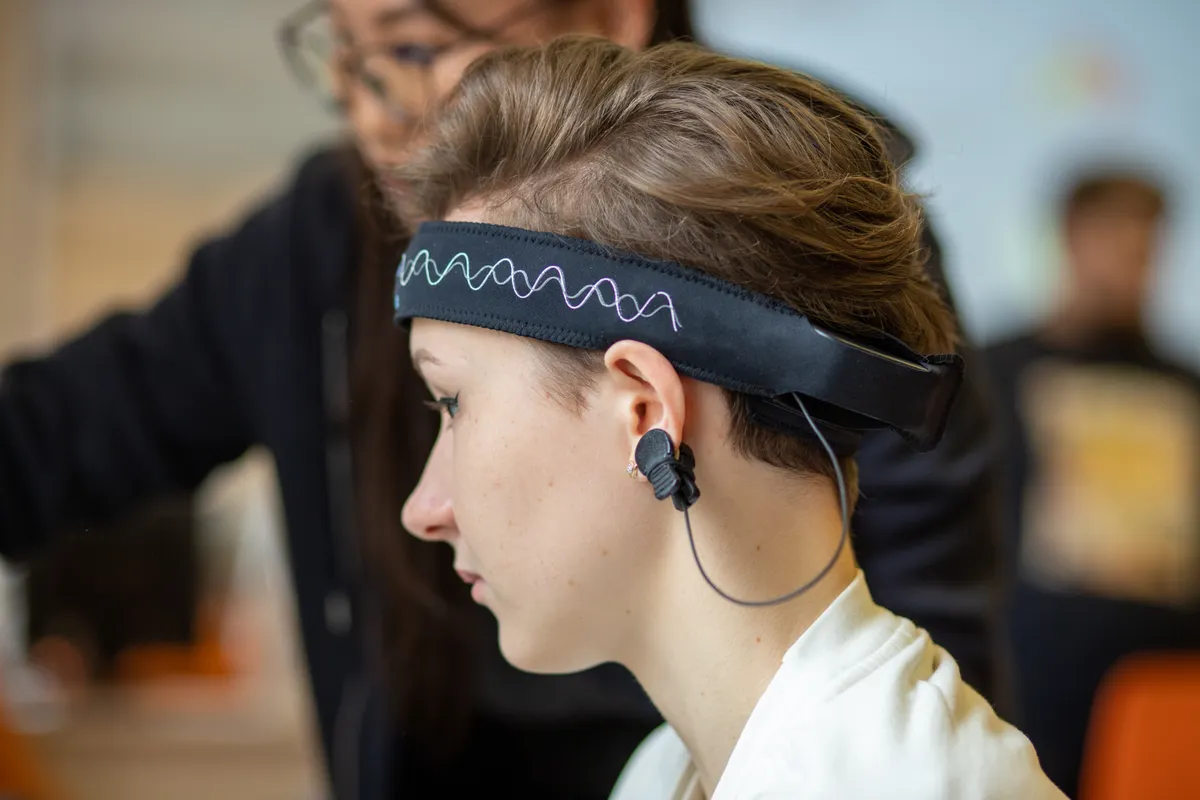
To overcome this depth limitation, researchers are evaluating nano-pulsed laser therapy, commonly referred to as NPLT. This specific type of photobiomodulation therapy uses a pulsed 808-nanometer near-infrared laser light combined with optoacoustically generated ultrasound waves. By integrating light and acoustic energy, this system aims to stimulate deeper brain structures than would be accessible by traditional photobiomodulation therapy.
The physics of near-infrared light are uniquely suited for deep-tissue penetration. Standard light-emitting diodes, or LEDs, produce light waves that disperse rapidly when they contact biological tissue, limiting their reach. By contrast, the 808-nanometer wavelength used in this laser therapy penetrates biological tissues more effectively. This allows the therapeutic energy to target the hippocampus, a deep brain structure crucial for learning and memory.
The addition of optoacoustically generated ultrasound waves provides a unique form of stimulation. These ultrasound waves are generated when deep tissues absorb the rapid pulses of laser light, creating microscopic pressure waves. This localized acoustic energy is hypothesized to modulate neural stem cells more dynamically than light alone. This dual-action approach represents a highly targeted method for delivering therapeutic stimulation directly to deep brain regions.
An in vitro study published in the Journal of Alzheimer's Disease tested this hypothesis by applying nano-pulsed laser therapy to adult hippocampal neural stem cells. These stem cells were stimulated with the laser before undergoing neuronal differentiation, which is the process where stem cells mature into functional neurons. Once the cells differentiated, they were exposed to toxic amyloid-beta oligomers to evaluate their survival and resilience.
The laboratory results demonstrated that neurons derived from the treated stem cells developed a striking biological resilience. These mature neurons showed a marked resistance to amyloid-beta binding, meaning the toxic proteins could not easily attach to the cell membranes. In untreated neurons, this binding typically disrupts cellular communication and leads to cell death. The pre-treated neurons, however, maintained their structural integrity.
Additionally, the pre-treated cells were protected against mitochondrial toxicity, which otherwise impairs the cell's primary energy-producing structures. Mitochondria function as microscopic powerplants, generating the adenosine triphosphate needed for cellular survival and repair. Protecting these powerplants is essential for mitochondrial energy optimization, ensuring that brain cells maintain the energy reserves required to survive toxic stress. The laser-stimulated cells successfully avoided mitochondrial collapse.
The researchers also observed positive genetic changes, specifically an increased expression of genes associated with autophagy and proteostasis. Autophagy represents the cell's natural self-cleaning system that clears out damaged components, while proteostasis refers to the maintenance of healthy, properly folded proteins. This enhanced clearance mechanism is critical for maintaining preserved synaptic networks within the brain. By boosting these pathways, the laser therapy helped the developing cells build a highly efficient, self-cleaning infrastructure.
"Our findings support the hypothesis that NPLT modulation of hippocampal neurogenesis can be an effective non-invasive approach to induce resilience against AD toxic oligomers."
To understand how these laboratory findings translate to clinical practice, we must look at current human research. A scoping review published in Clinical Interventions in Aging systematically summarized the application of photostimulation therapy in patients with Alzheimer's disease. The authors evaluated the implementation characteristics, outcome indicators, and intervention effects in cognitive function to identify existing evidence gaps. This review helps bridge the gap between laboratory cellular models and clinical patient care.
The clinical data analyzed in the review indicate that photostimulation therapy is increasingly being used in the adjunctive management of Alzheimer's patients. Researchers have observed various implementation characteristics across different clinical studies, showing potential benefits for cognitive function. However, the review emphasizes that a comprehensive, systematic evaluation is still lacking. This lack of standardized protocols means that while the therapy is promising, more consistent research is required.
"Photostimulation therapy, as a non-invasive neuromodulation method, has been increasingly used in the adjunctive management of Alzheimer's patients in recent years."
One major challenge in translating these findings is the physical complexity of the human brain. While laboratory cultures of neural stem cells are directly exposed to laser light in a petri dish, human stem cells are located deep within the hippocampus. Delivering sufficient therapeutic energy through the human skull without causing localized tissue heating requires highly specialized medical systems. This physical barrier highlights the vast difference between laboratory experiments and clinical applications.
Critical Study Limitations and Translational Challenges
It is vital to analyze the limitations of these findings to maintain realistic expectations about this emerging technology. The primary study demonstrating protection against amyloid-beta oligomer toxicity was conducted entirely in vitro on adult neural stem cells, rather than in living human subjects. Cultured cells in a laboratory environment do not experience the complex biological interactions of a living brain. Additionally, because these are early-stage laboratory findings, the optimal parameters, safety profiles, and precise treatment schedules for human patients remain completely unknown.
Actionable Takeaways and Clinical Reality
Currently, there are no clinically established lifestyle protocols, dosages, or home-use guidelines for this experimental therapy. Standard consumer light panels and red-light face masks cannot replicate the deep-tissue penetration of nano-pulsed laser therapy. Attempting to self-administer untested light therapies for cognitive health is not supported by clinical evidence. For now, the most scientifically sound approach is to monitor ongoing clinical trials as this technology undergoes formal validation.
Ultimately, this research opens an exciting new chapter in neurodegenerative medicine. By treating neural stem cells to build resilience before damage occurs, scientists are exploring how to secure the brain's cognitive infrastructure from within. As clinical trials progress, this light-based technology may eventually transition from a fascinating laboratory breakthrough into a validated shield for the aging brain.
This article is for informational and educational purposes only and is not intended as medical advice. It does not replace professional medical care, diagnosis, or treatment. Readers should always consult a qualified healthcare professional or neurologist regarding their individual health situation. Never disregard professional medical advice, or delay seeking it, because of something read in this article.
Sources & References
Journal of Alzheimer's disease : JAD
Research Date: August 2026
PubMed ID: 41603339
Additional References
Clinical Interventions in Aging
Scoping review of photostimulation therapy applications in Alzheimer's patients
Related Intelligence Briefings
Perimenopause Alzheimer Risk: How Hormonal Imbalance Triggers a Brain Energy Crisis
How Depression Accelerates Your Biological Age: What the Science Shows
Serum 25-Hydroxyvitamin D Status and Long-Term Cognitive Decline in Sensory-Impaired Cohorts
Cognitive Longevity Protocol
Evaluate your biological biomarkers for brain health. Learn how targeted clinical protocols can mitigate cognitive depreciation and preserve clarity.